


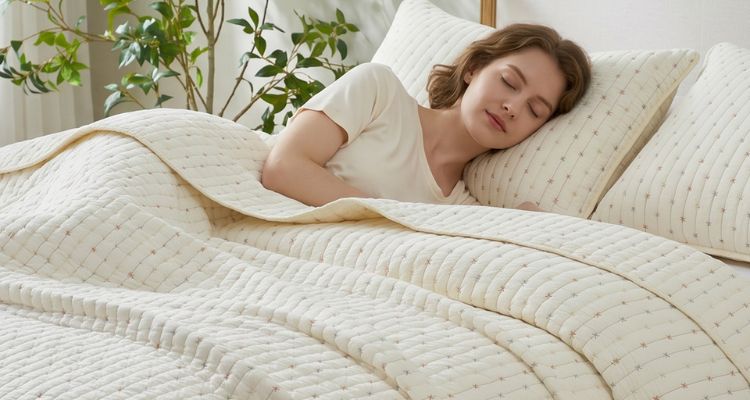
When shopping for a comforter, many people look at words like “lightweight,” “all-season,” or “extra warm.” The problem is that these terms are not always consistent across brands. One brand’s lightweight comforter may feel too warm for a hot sleeper, while another all-season comforter may not be enough for a cold bedroom.
That is where GSM can help.
GSM stands for grams per square meter. In simple terms, it tells you how much filling is used in each square meter of a comforter. The higher the GSM, the more fill the comforter has — and in most cases, the warmer it will feel.
Understanding comforter GSM can help you choose a better bedding layer for your room temperature, sleep style, and season.
What Does GSM Mean in a Comforter?
GSM measures the fill weight of a comforter, not the size of the comforter itself. A 150 GSM comforter and a 300 GSM comforter may look similar on a bed, but they can feel very different when you sleep under them.
In general:
1. Lower GSM means lighter warmth and better breathability
2. Medium GSM works well for all-season comfort
3. Higher GSM provides more insulation for colder rooms
However, GSM is not the only thing that affects warmth. Shell fabric, stitching, fill material, room temperature, and personal sleep habits also matter.
For example, a breathable comforter with a cotton-like or moisture-friendly shell may feel cooler than a comforter with the same GSM but a tighter synthetic shell. Stitching also matters because it helps keep the fill evenly distributed instead of shifting into corners.
Comforter GSM Chart by Season and Sleep Type
Use this comforter GSM chart as a practical starting point:
| GSM Range | Best For | Sleep Type | Room Temperature |
| 100–150 GSM | Summer comforter | Hot sleepers | Above 72°F |
| 150–200 GSM | Lightweight comforter | Warm sleepers | 68–74°F |
| 200–260 GSM | All-season comforter | Most sleepers | 65–72°F |
| 260–300 GSM | Warmer comforter | Cold-leaning sleepers | 62–68°F |
| 300+ GSM | Winter comforter | Cold sleepers | Below 62°F |
These ranges are general guidelines. If you sleep hot, choose a lower GSM. If you sleep cold or live in a colder climate, a higher GSM or layered bedding setup may feel better.
100–150 GSM: Best for Summer and Hot Sleepers
A 100–150 GSM comforter is best for warm rooms, summer nights, and hot sleepers who still want light coverage.
This range works well if your bedroom stays above 72°F, you live in a warm climate, or you dislike the weight of a traditional comforter. A low-GSM summer comforter can give you the feeling of being covered without trapping too much heat.
It may not be enough for cooler bedrooms, but it is a good choice for hot sleepers, guest rooms in warm climates, or people who use air conditioning lightly.
150–200 GSM: Lightweight but More Practical
A 150–200 GSM comforter still feels light, but it offers a little more warmth than a very thin summer comforter. This is a good range for warm sleepers who want something usable beyond peak summer.
It can work well in air-conditioned bedrooms, mild climates, or as a year-round comforter for people who naturally sleep warm.
If you often wake up sweaty under regular bedding, this GSM range may be more comfortable than a standard all-season comforter.
200–260 GSM: The Most Flexible All-Season Range
For many households, 200–260 GSM is the most practical comforter fill weight. It offers enough warmth for cooler nights while still feeling manageable in a climate-controlled bedroom.
This range is often considered the best all-season comforter option because it works for many moderate sleepers and typical room temperatures between 65°F and 72°F.
If you want one comforter for most of the year, start here. It is also a safe choice for guest rooms because it does not lean too strongly toward very hot or very cold sleepers.
260–300 GSM: Better for Cooler Rooms
A 260–300 GSM comforter is better for people who sleep slightly cold or keep their bedroom cooler at night. It provides more insulation and a fuller feel without becoming as heavy as a deep-winter comforter.
This range can work well for fall, spring, mild winter, or year-round use in cooler homes.
If your room often drops below 65°F, or if you like a warmer and cozier comforter, this GSM range may be more suitable.
300+ GSM: Best for Winter and Cold Sleepers
A comforter above 300 GSM is designed for stronger warmth. It is best for cold sleepers, winter bedding, older homes, or bedrooms that stay below 62°F.
This type of comforter may feel too warm for summer or for people who sleep hot. If your bedroom temperature changes by season, it may be better to use a lighter comforter most of the year and add a blanket in winter instead of choosing the heaviest comforter for all seasons.
What GSM Does Not Tell You
GSM is useful, but it does not explain everything about how a comforter feels.
It does not fully tell you:
· How breathable the outer shell is
· Whether the filling stays evenly distributed
· Whether the comforter feels fluffy or flat
· How it performs in humid rooms
· Whether it is suitable for sensitive skin
· How easy it is to wash and dry
This is why it is better to look at GSM together with material, stitching, care instructions, and certifications.
For example, OEKO-TEX® STANDARD 100 certification can be a helpful signal for textile safety because it means the product has been tested for harmful substances. You can learn more from the official OEKO-TEX® website: https://www.oeko-tex.com/en/our-standards/oeko-tex-standard-100
How to Choose the Right Comforter GSM
Here is a simple way to decide:
If you sleep hot or live in a warm climate, choose 100–200 GSM.
If you want one comforter for most seasons, choose 200–260 GSM.
If you sleep cold or keep your room cooler, choose 260–300 GSM.
If you need strong winter warmth, choose 300+ GSM.
The CDC also recommends keeping your sleep environment cool, dark, quiet, and comfortable as part of healthy sleep habits. Room temperature and bedding choice should work together, not against each other. You can read more from the CDC here: https://www.cdc.gov/sleep/about/index.html
Cozy Bliss Comforter Fit
Cozy Bliss comforters are designed for real homes, where sleep needs can change by season, room temperature, and personal preference. Whether you are looking for a lightweight comforter for summer, an all-season comforter, or a warmer bedding layer for cooler nights, the goal is to choose the fill weight that matches how you actually sleep.
For hot sleepers, breathable and lower-GSM bedding may feel more comfortable. For moderate sleepers, an all-season fill weight is often the easiest choice. For cold sleepers, a higher-GSM comforter or layered bedding setup can create a cozier sleep experience.
The best comforter is not always the thickest one. It is the one that helps you stay comfortable through the night without overheating or waking up cold.
FAQ
1. What does GSM mean in a comforter?
GSM means grams per square meter. It measures how much fill is used in each square meter of a comforter. Higher GSM usually means more warmth, while lower GSM usually feels lighter and cooler.
2. What GSM is best for a summer comforter?
For summer, 100–200 GSM is usually best. Hot sleepers or people in warm rooms may prefer 100–150 GSM, while air-conditioned bedrooms may work well with 150–200 GSM.
3. What GSM is best for an all-season comforter?
A 200–260 GSM comforter is usually a good all-season choice for most climate-controlled bedrooms. It offers balanced warmth without feeling too heavy for moderate sleepers.
4. Does higher GSM always mean warmer?
In most cases, yes. Higher GSM means more fill, which usually traps more warmth. However, shell fabric, fill type, stitching, and room temperature also affect how warm a comforter feels.
5. Is a 300 GSM comforter too hot for summer?
For many hot sleepers, yes. A 300 GSM comforter is usually better for cooler rooms, fall, winter, or cold sleepers. In summer, a lower-GSM comforter is usually more comfortable.
6. Should hot sleepers choose a lower GSM comforter?
Yes. Hot sleepers usually feel better with a lower-GSM comforter, breathable shell fabric, and lightweight bedding layers. This helps reduce heat buildup during the night.


Hinterlasse einen Kommentar
Diese Website ist durch hCaptcha geschützt und es gelten die allgemeinen Geschäftsbedingungen und Datenschutzbestimmungen von hCaptcha.