






For many dog owners, jumping on and off the couch or bed feels like a normal part of everyday life. Dogs do it effortlessly, and most of the time, it doesn’t seem like a problem. But over time, what looks easy can quietly place repeated strain on joints—especially for small breeds, senior dogs, or those with back sensitivity.
That’s why a growing number of pet owners are rethinking this everyday routine. Pet stairs aren’t just a convenience—they’re a simple way to make everyday movement safer and more comfortable. If you’re still unsure whether your dog actually needs them, the answer often comes down to subtle signs rather than obvious problems.
If you’re comparing options, check out our guide on dog stairs versus ramps to see which solution best fits your home setup.
Why Pet Stairs Are More Than Just a Convenience
It’s easy to assume that pet stairs are only necessary for older dogs or those with visible mobility issues. In reality, they’re often more about prevention than correction—and timing plays a bigger role than most people expect.
Dogs repeat the same movements every day—jumping up, jumping down, sometimes dozens of times. While a single jump may seem harmless, the cumulative impact over months or years can quietly place strain on joints and the spine. This is especially true for small breeds, senior dogs, or those with longer backs.
Because of this, many experienced pet owners choose to introduce stairs earlier rather than waiting for a problem to appear. Dogs naturally repeat behaviors that feel easy. If jumping becomes a daily habit, it can be difficult to change later. On the other hand, introducing stairs early allows dogs to incorporate them into their routine before any resistance develops.
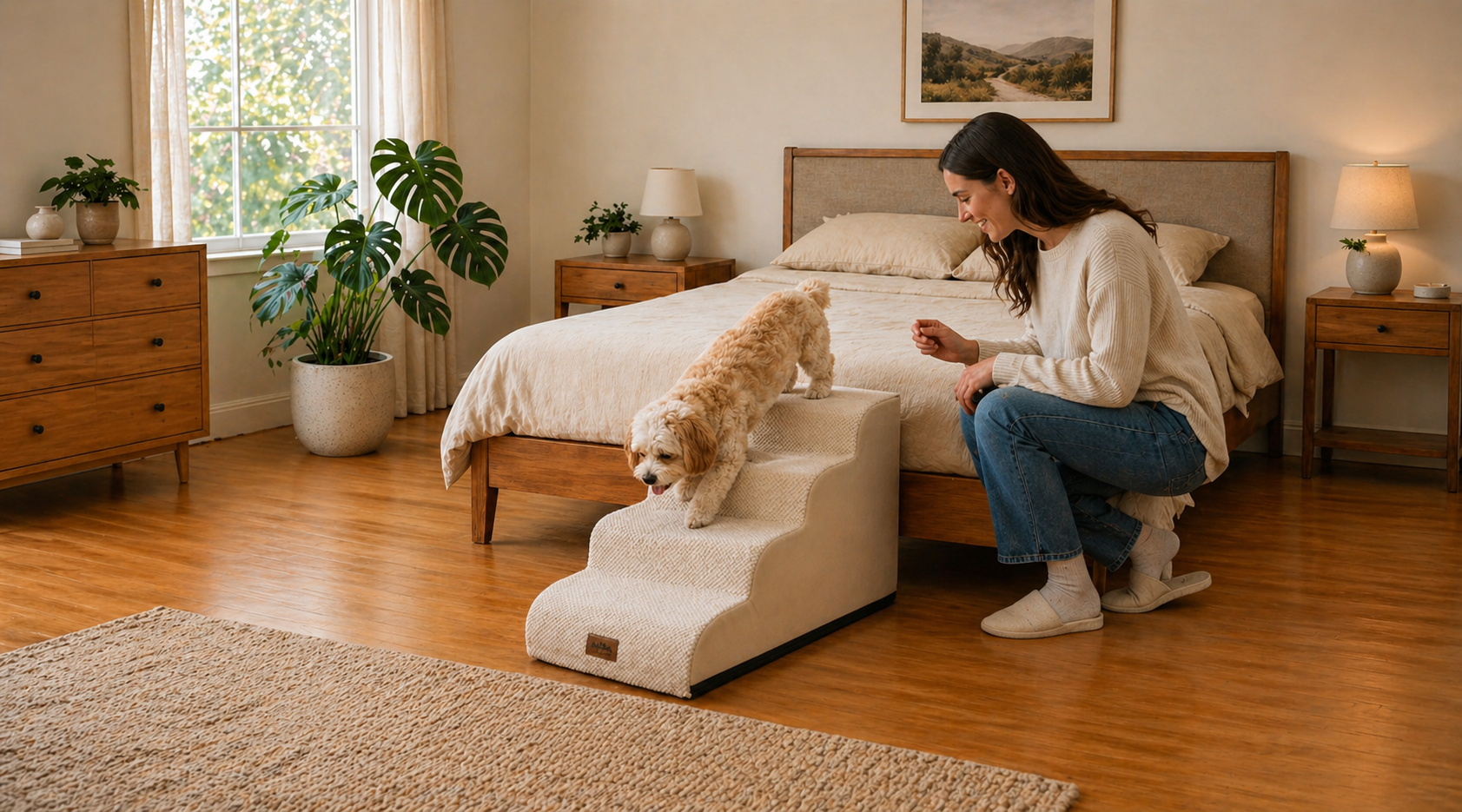
Using stairs doesn’t mean your dog can’t jump anymore. It simply gives them a safer option—and over time, many dogs begin to choose it on their own. If you’re unsure how to introduce stairs step by step, you can follow our guide to train your dog to use stairs, which focuses on building confidence gradually.
Signs Your Dog Might Need Stairs
Not every dog shows obvious signs of discomfort right away. In many cases, the early signals are subtle—small changes in behavior or movement that are easy to overlook unless you’re paying close attention.
Hesitation Before Jumping
 One of the first things many owners notice is hesitation. A dog that used to jump onto the couch without thinking might suddenly pause, look up, or reposition themselves before attempting it. This hesitation doesn’t always mean pain, but it often indicates that the movement is no longer as effortless or comfortable as it once was.
Waiting to Be Lifted Instead of Jumping
Over time, that hesitation can turn into avoidance. Some dogs begin waiting to be lifted instead of jumping on their own. It’s often mistaken as laziness or dependence, but in reality, it’s usually a sign of reduced confidence or mild discomfort that hasn’t become obvious yet.
Changes in Movement and Coordination
You may also notice small changes in how your dog moves. Taking multiple attempts to get onto furniture, being extra cautious when climbing down, or choosing lower surfaces instead of higher ones are all signals that the body is starting to compensate. These adjustments tend to happen gradually, which is why they’re easy to miss.
Frequent Jumping as a Habit
Even in dogs that show no hesitation at all, repetition itself can be a concern. Jumping up and down throughout the day—especially between couches, beds, and floors—creates repeated impact on joints. While each jump may seem harmless, the long-term effect can quietly add up.
Subtle Signs of Joint Discomfort
In some cases, the signs are even more subtle. Slight stiffness after resting, moving a bit slower than usual, or showing less enthusiasm for jumping can all point to early joint strain. These changes don’t always mean something is “wrong,” but they do suggest that reducing daily impact could make a meaningful difference over time.
Which Dogs Benefit the Most from Stairs
While most dogs can benefit from reducing repetitive impact, some groups tend to see the biggest improvement when stairs are introduced into their routine.
Small and Short-Legged Breeds
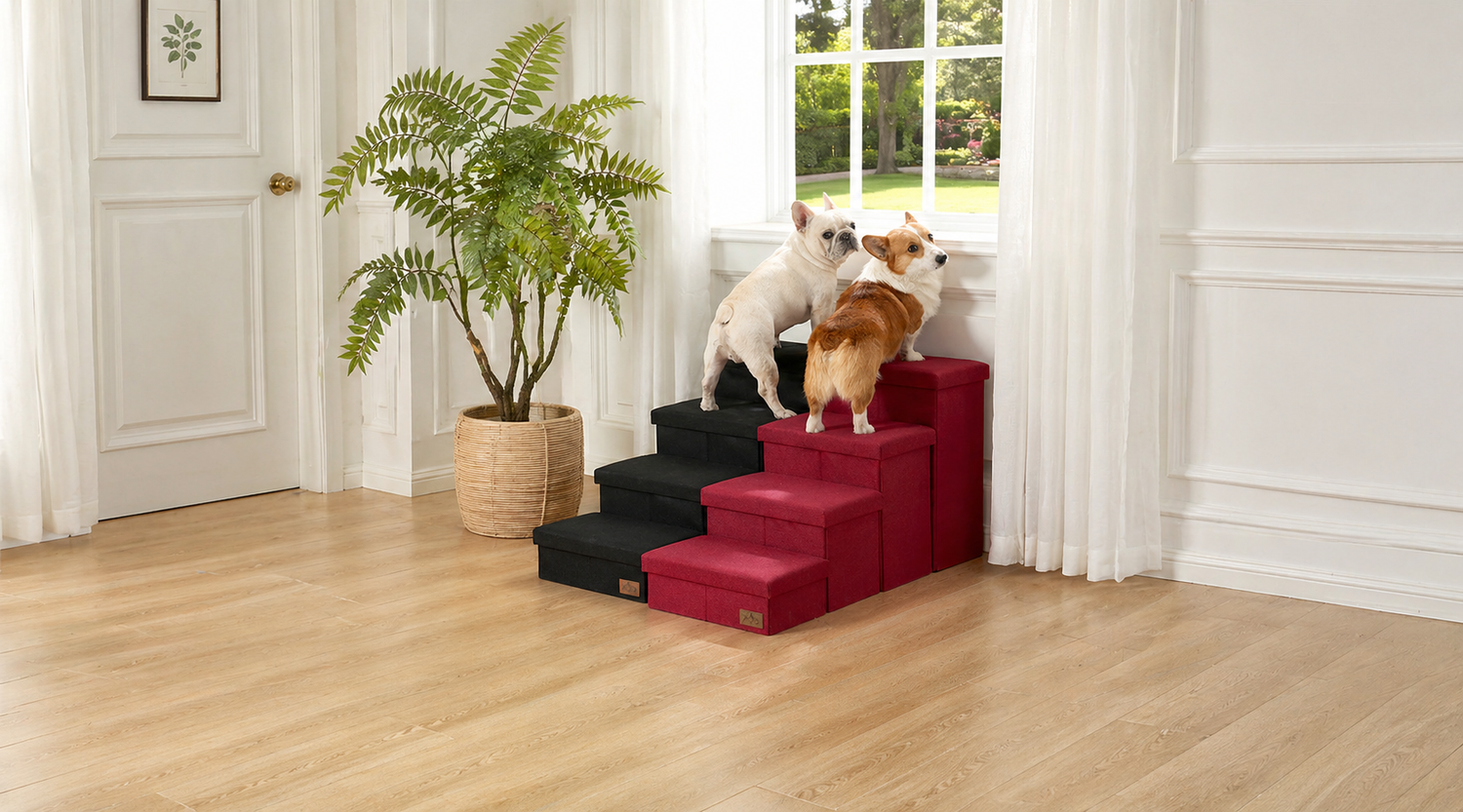
Small and short-legged breeds often experience more strain than their size might suggest. Breeds such as dachshunds or corgis have body structures that make jumping less effective, particularly when they have to clear any height.

Key improvements:
What looks like a small jump to us can require significant effort for them.Senior Dogs
Senior dogs are another obvious group, but not just because of age alone. As dogs get older, joint flexibility naturally decreases, and recovery from repeated impact takes longer. Stairs offer a more controlled, predictable way to move, which helps reduce unnecessary stress.
Dogs with Back or Joint Sensitivity
Dogs with back sensitivity or joint concerns also benefit significantly, even when those issues are mild. Conditions related to the spine or hips don’t always require medical treatment, but they do respond well to small environmental changes—like reducing how often a dog needs to jump.
Post-Recovery Dogs
For dogs recovering from surgery or injury, stairs can play an even more important role. During recovery, limiting sudden movements is crucial — and stairs can help maintain normal routines without risking added strain.
Even Young, Active Dogs
Interestingly, one of the most overlooked groups is healthy, active dogs. Because they show no visible issues, it’s easy to assume they don’t need support. But introducing stairs early can help prevent long-term wear and tear, making it a proactive choice rather than something you only consider after a problem appears.
Choosing the Right Pet Stairs for Your Dog
Not all pet stairs are equally effective, and in many cases, the design itself determines whether a dog will actually use them. Even with training, dogs may hesitate if the stairs feel unstable, too steep, or unfamiliar under their paws. That’s why choosing the right structure matters as much as the training process itself.
What Makes Pet Stairs Easier for Dogs to Use
In everyday use, a few design details can make a noticeable difference in how dogs respond:

- Wider steps help dogs feel more balanced and secure
- Gentle step height reduces effort and minimizes joint strain
- Supportive yet soft materials create a more comfortable, less intimidating surface
- Non-slip bases keep the stairs stable on different floor types
These details may seem small, but they directly influence how safe and predictable the stairs feel—something dogs rely on when deciding whether to trust and use them.
Why Material and Structure Matter More Than You Think
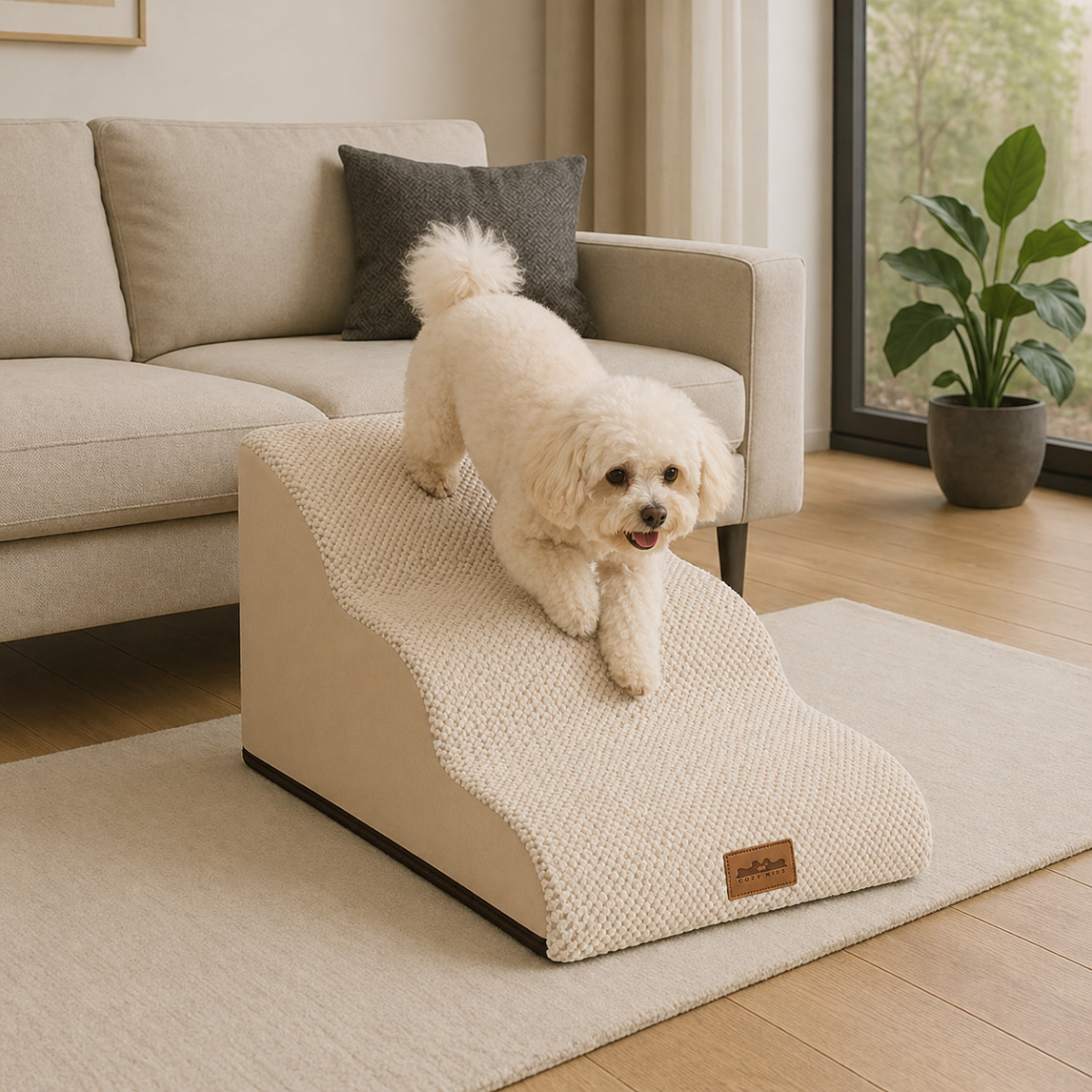
Beyond shape and size, the material of the stairs plays a major role in your dog’s experience. Many pet owners find that foam-based stairs are easier for dogs to accept compared to harder, rigid structures. They provide a softer landing while still offering enough support for daily use.
Brands like Cozy Bliss, which focus on comfort and stability, tend to take this approach—using softer structures that feel less intimidating under a dog’s paws. For smaller dogs, seniors, or those still building confidence, that sense of comfort can make a real difference in whether they’re willing to use the stairs at all.
Why the Right Design Makes Training Easier
At the end of the day, the goal isn’t just to have stairs in your home—it’s to have something your dog actually chooses to use. When stairs feel stable, comfortable, and predictable, dogs naturally become more willing to engage with them.
And when that happens, training becomes much easier. Instead of forcing a new behavior, you’re simply reinforcing something that already feels right to your dog. This is also why many pet owners find that once the stairs feel right, training becomes significantly easier—because the product itself is no longer part of the resistance.
Final Thoughts
The question isn’t always whether your dog needs stairs right now—it’s whether they would benefit from them over time. For some dogs, the need is immediate; for others, it’s preventative. But in most cases, reducing daily impact and making movement easier are small changes that add up in a meaningful way. Once stairs feel natural, they’re no longer something your dog has to use—they become something they choose, and that’s what ultimately makes the difference.
FAQ
Do all dogs need stairs?
Not every dog needs stairs right away, but many can benefit from them over time. Dogs that jump frequently, smaller breeds, and senior dogs tend to experience more joint strain in daily life. Even for healthy dogs, stairs can serve as a preventative solution by reducing long-term impact rather than waiting until a problem appears.
How do I know if my dog needs stairs?
In most cases, the signs are subtle rather than obvious. You might notice hesitation before jumping, your dog waiting to be lifted, or taking extra effort to get on and off furniture. These small changes often appear before any visible discomfort, making them useful early indicators.
Are stairs better than ramps?
It depends on your dog and your home setup. For indoor use, stairs often feel more natural because they match how dogs move—step by step, rather than on a slope. Ramps, on the other hand, can be a better option for dogs with more specific mobility limitations or recovery needs.
Can puppies use stairs?
Yes, puppies can use stairs, especially with supervision. Introducing them early can help build safer movement habits and reduce the likelihood of developing high-impact jumping routines as they grow.
Why does my dog still jump even when stairs are available?
Jumping is often a habit rather than a preference. Even after learning to use stairs, dogs may continue jumping simply because it’s familiar. With consistent placement of the stairs and regular use in daily routines, most dogs gradually begin to choose stairs instead.


Dejar un comentario
Este sitio está protegido por hCaptcha y se aplican la Política de privacidad de hCaptcha y los Términos del servicio.