






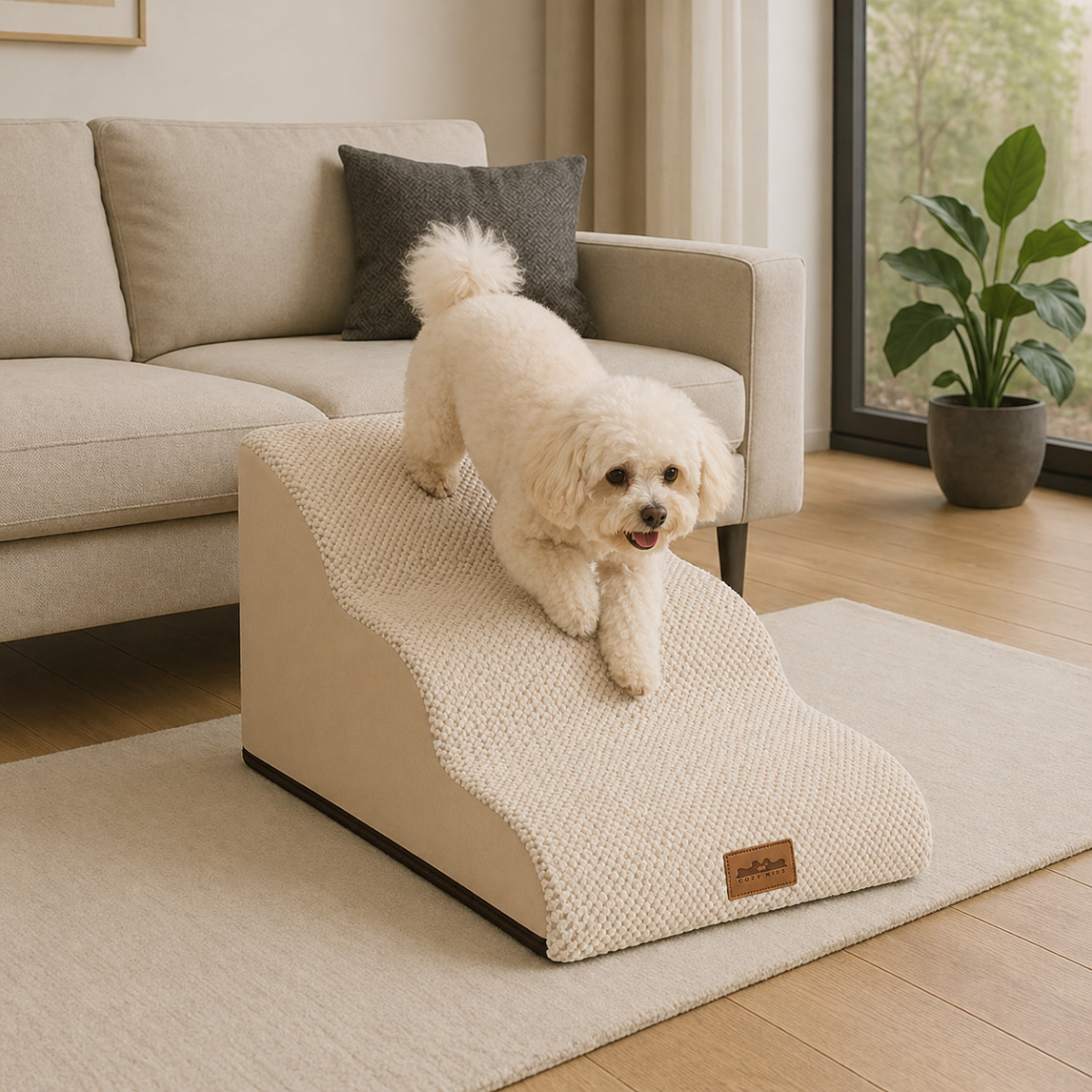
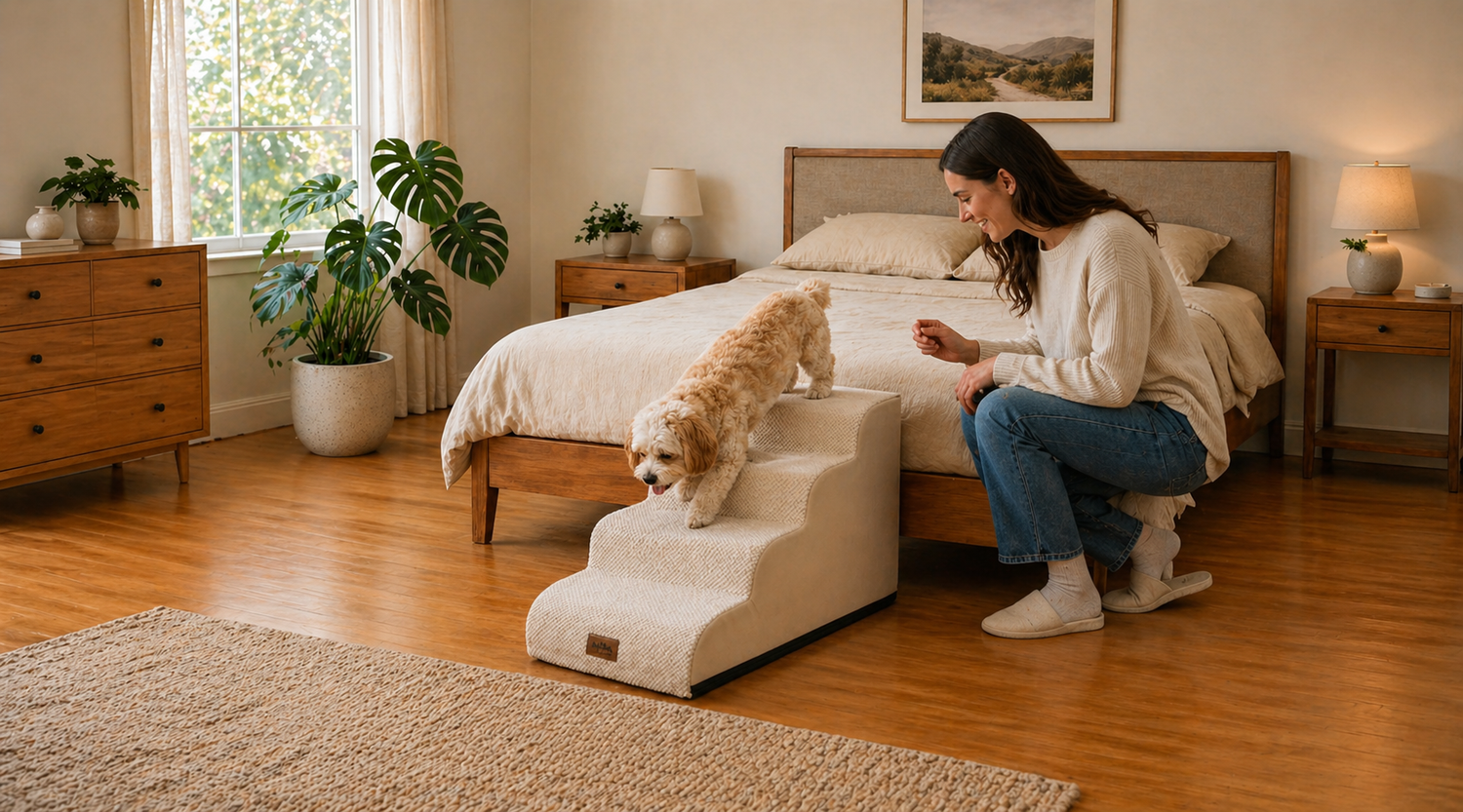
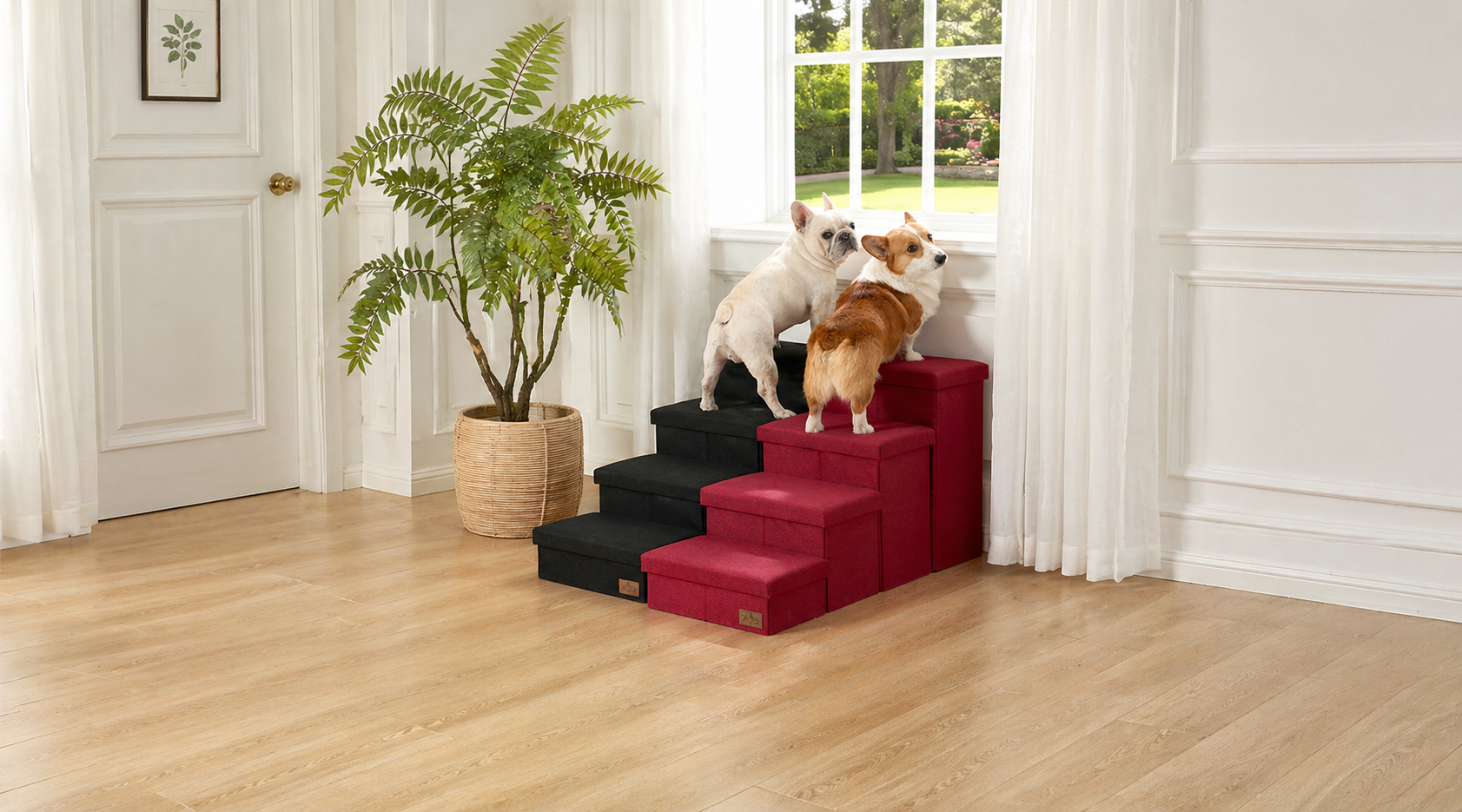
For many dogs, jumping on and off furniture is just part of daily life—but over time, it can quietly put strain on their joints, especially for small breeds, seniors, or dogs with back sensitivity. That’s why more pet owners are turning to dog stairs as a safer, more sustainable alternative. Compared to ramps, stairs often feel more intuitive indoors because they match how dogs naturally move—step by step, rather than on an incline.
Still, even when stairs are the better option, getting your dog to use them isn’t always straightforward. Some dogs hesitate at the first step, others refuse completely, and some seem to understand but continue jumping out of habit.
The reality is simple: using dog stairs is not instinctive—it’s learned behavior. But with the right approach, patience, and consistency, even older or stubborn dogs can become confident and consistent stair users.
Before You Start: Set Your Dog Up for Success
Based on widely accepted positive reinforcement training methods, dogs learn best when they are allowed to explore and make decisions on their own rather than being forced into behavior.
To your dog, stairs are not automatically helpful. They’re just a new object. Whether your dog accepts them depends largely on how they feel under their paws—are they stable, predictable, and comfortable?
That’s why experienced trainers often emphasize starting slow. According to common positive reinforcement training principles used by professional trainers, dogs learn best when they are allowed to explore and make decisions on their own, rather than being forced into behavior.
Start by placing the stairs in a familiar area, such as next to the couch or bed your dog already uses. Let them approach it naturally—sniffing, walking around it, or even ignoring it at first is completely normal. Don't rush at this stage, since familiarity is key to building confidence.
Keep training sessions short and consistent. A few minutes per day is far more effective than long sessions that overwhelm your dog. Most importantly, avoid forcing your dog onto the stairs, as this often creates resistance—especially for smaller dogs or seniors.

The goal is simple: make the pet stairs feel like a natural, safe part of your dog’s everyday routine.
Situation 1: “My Dog Won’t Go Near the Stairs”
Why does it happen
This is one of the most common starting points. If your dog avoids the stairs entirely, it usually means they feel unfamiliar or slightly intimidating.
How to solve it
Instead of asking your dog to use the stairs, focus on passive exposure. Place the stairs in a high-traffic area where your dog naturally walks—such as near a doorway or beside their favorite resting spot. This allows them to interact with the stairs without pressure.
You can also create positive associations by placing treats near or on the first step. Every small interaction—looking at it, sniffing it, stepping closer—should be rewarded.
Some trainers also recommend feeding meals near the stairs to reinforce a calm, positive connection.
At this stage, success is not climbing—it’s comfort.
Situation 2: “My Dog Refuses to Step On”
Why does it happen
Even if your dog is comfortable being around the stairs, stepping onto them requires confidence. The surface, height, or texture may feel unfamiliar.
How to solve it
Break the process into smaller steps. Instead of expecting your dog to climb, focus on getting just one paw onto the first step.

Use high-value treats to guide them gently, and reward immediately for any progress. Over time, build toward:
- One paw on the step
- Both front paws
- Standing briefly on the first step
This gradual progression is key. Many dogs need repeated exposure before they feel secure.
Stability also plays a critical role here. Soft yet supportive foam stairs, wider steps, and non-slip bases can make a noticeable difference, as dogs are far more willing to engage when the surface feels steady under their paws.
Situation 3: “My Dog Starts But Won’t Continue”
Why does it happen
Some dogs will step onto the stairs but stop halfway. This usually indicates uncertainty rather than refusal.
How to solve it
The best approach is to reduce perceived difficulty. Encourage short movements one step at a time—rather than expecting a full climb.
Use treats to direct them, but allow your dog to make the choice to step forward on their own. Even partial progress should be rewarded.
Consistency matters more than speed. Over time, repeated short successes build confidence, and confidence leads to natural movement.
A stable design again helps here. When each step feels predictable in height and texture, dogs are much more likely to continue forward instead of hesitating.
Situation 4: “My Dog Still Chooses to Jump”
Why does it happen
Even after learning to use stairs, many dogs continue jumping simply because it’s a long-established habit.
How to solve it
This is less about learning and more about behavior replacement.
Make the stairs the easiest option by adjusting the environment:
- Place the stairs directly where your dog typically jumps
- Block alternative jumping paths with cushions or furniture
- Reward stair use consistently during daily routines
Dogs rely heavily on habit. When stair use is repeated in real-life situations—getting on the couch, coming down from the bed—it gradually replaces jumping as the default behavior.
This stage often takes time, especially if your dog has been jumping for months or years.
Situation 5: “My Dog Only Uses Stairs When I’m There”
Why does it happen
Some dogs treat stairs as a “training activity” rather than a functional tool. They rely on your presence to guide them.
How to solve it
Shift training into everyday life. Instead of repetitive up-and-down sessions, integrate stairs into real moments.
For example, guide your dog up onto the couch using the stairs, then spend time there—playing, relaxing, or cuddling—before guiding them down again.
This helps your dog understand that stairs are not a task, but a way to access something they enjoy.
Over time, they begin to use the stairs independently, without needing cues.
Why the Right Stairs Make Training Easier
Not all pet stairs feel the same to dogs, and that directly impacts how quickly they learn.
Features that improve training success include:
- Wider steps for better balance
- Gentle step height to reduce joint strain
- High-density foam that feels supportive, not hard
- Non-slip bases for stability on different floor types

When pet stairs feel stable and comfortable, dogs naturally become more willing to use them. This reduces hesitation and shortens the learning curve significantly.
When pet stairs feel stable and comfortable, dogs naturally become more willing to use them. This reduces hesitation and shortens the learning curve significantly.
Emily, a dog owner from California, shared that her 12-year-old dachshund refused to use stairs at first and would simply wait to be lifted onto the couch. After switching to foam Pet Stairs, he gradually started using them on his own. Within a couple of weeks, the hesitation disappeared, and using the stairs became part of his daily routine.
Final Thoughts
Training your dog to use stairs is not about forcing behavior—it’s about making that behavior feel natural.
Some dogs learn in days, others take weeks. Both are completely normal. What matters most is consistency, patience, and creating a positive experience.
Once your dog feels confident, using stairs won’t be something they have to do—it becomes something they choose. And that’s when real habit change happens.
FAQ
How long does it take to train a dog to use stairs?
It depends on the dog. Some adapt within a few days, while others may take a few weeks. Consistency matters more than speed.
What if my dog is scared of the stairs?
Start with exposure only. Let your dog become comfortable being around the stairs before encouraging interaction.
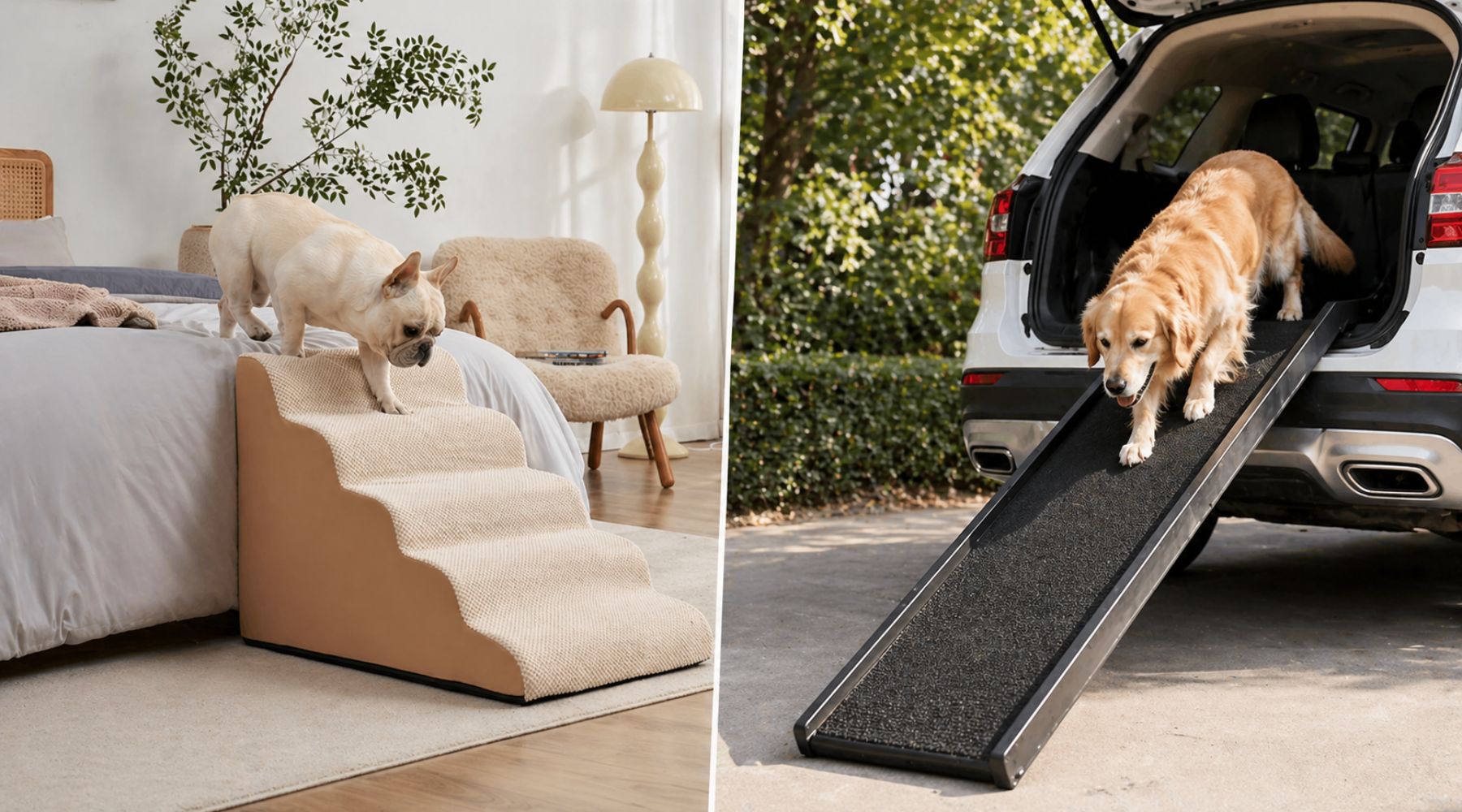
Are stairs better than ramps?
For many indoor environments, stairs feel more natural because they match how dogs move—step by step rather than on an incline.
Can senior dogs learn to use stairs?
Yes. In fact, properly designed stairs can be especially helpful for senior dogs when introduced gradually and safely.
Why does my dog still jump after learning stairs?
Jumping is a habit. With repetition, environmental adjustments, and consistent reinforcement, most dogs gradually switch to using stairs instead.

Dejar un comentario
Este sitio está protegido por hCaptcha y se aplican la Política de privacidad de hCaptcha y los Términos del servicio.