






At first glance, a ramp seems simple. It looks like an easy way for dogs to walk up and down. But in real-life use, many pet owners notice that dogs do not always respond the way we expect.
The real difference comes down to how dogs feel when using each option. If your dog jumps on and off the bed or couch every day, you’ve probably wondered whether you should get dog stairs or a ramp.
Why Reducing Jumping Matters
Jumping may not cause problems right away, which is why many dog owners tend to overlook it. Repeated jumping places continuous strain on a dog’s joints, leading to cumulative damage over time. According to the American Kennel Club, joint issues in dogs often develop gradually over time
This is especially important for:
- Small breeds with shorter legs
- Senior dogs with aging joints
- Dogs with back, hip, or mobility issues
Veterinarians often point out that joint problems rarely happen overnight. Instead, they develop gradually through everyday habits — like jumping on and off beds or couches.
That’s why many experienced dog owners don’t wait until their dog shows pain. They look for ways to reduce impact early and protect long-term mobility.
Dog Stairs vs Ramp: Key Differences
The biggest difference is not just the structure itself, but how dogs actually experience it.
|
Feature |
Pet Foam Stairs |
Pet Ramp |
|
Portability |
✅ Highly portable – easy to move and reposition around the home |
❌ Often longer and bulkier, less convenient to reposition |
|
Weight |
✅ Lightweight – easy to carry for daily use |
❌ Heavier depending on material (wood or plastic) |
|
Home-Friendly Design |
✅ Soft fabric design that blends naturally into home décor |
❌ More functional look, may feel out of place indoors |
|
Variety |
✅ Multiple step heights and styles to fit different needs |
❌ More limited options for everyday indoor use |
|
Price |
✅ Generally more affordable for daily use |
❌ Can be more expensive, especially for foldable designs |
|
Best For |
✅ Beds, sofas, and everyday indoor movement |
❌ Cars, outdoor access, or higher platforms |
|
Senior Dogs |
✅ Lower impact, easier on joints and aging legs |
❌ May feel harder to manage due to the incline |
|
Small & Short-Leg Dogs |
✅ Step height is easier to handle and more natural |
❌ Slope can feel steep and less comfortable |
|
Pet Acceptance |
✅ Senior, small, and short-legged dogs tend to adapt more easily and feel more confident |
❌ Some dogs may hesitate or require training to use comfortably |
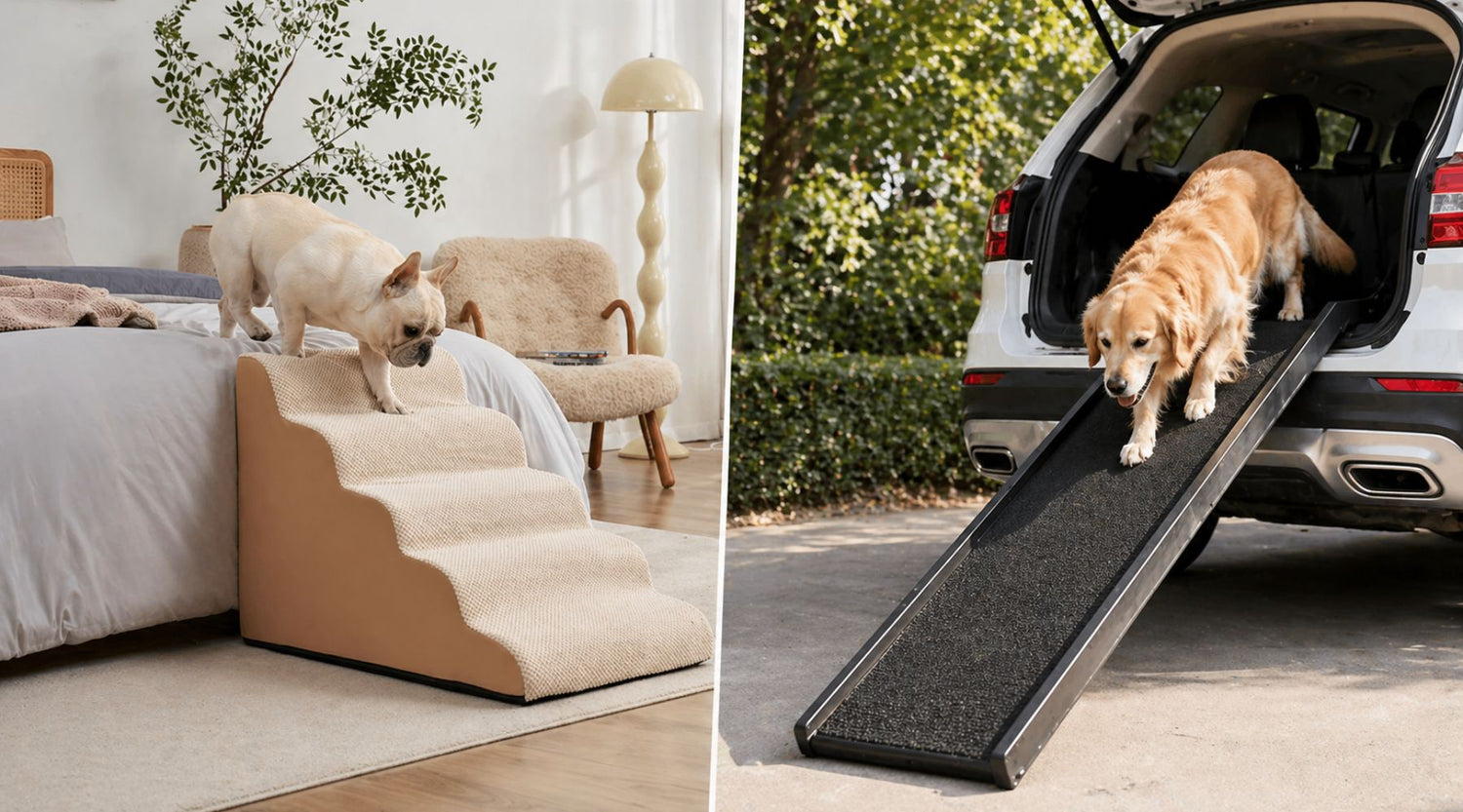
Stairs guide movement step by step, giving dogs clear points of contact and control. Ramps require continuous movement on an incline, which can feel unfamiliar and harder to balance—especially for older or cautious dogs.
In real-life use, this difference often determines whether a dog will confidently use the product or avoid it altogether.
Why Many Dogs Prefer Stairs
While the structural differences are important, real-life behavior often tells a more practical story — how dogs actually respond to stairs vs ramps in everyday use.

Movement Feels More Natural
Dogs naturally move in steps, not slopes. Stairs match how dogs instinctively climb, allowing them to pause, adjust, and move at their own pace.
Ramps, on the other hand, require continuous forward motion, which can feel uncertain, especially on an incline.
More Control Builds Confidence
Each step provides stability. Dogs know exactly where to place their paws, which reduces hesitation and builds confidence over time.
Laura, a small dog owner, shared that after her family built a wide step for their bed, their dogs adapted almost immediately. She noticed that the step-like structure felt stable and predictable, making daily use effortless.
Ramps Often Require More Training
Some dogs do use ramps, but many need time to adjust. Rachel, who has cared for a senior dog for years, explained that even after introducing a ramp, her dog never fully accepted it and still preferred to be lifted.
These real-life experiences point to a simple pattern: dogs are more likely to use something that feels stable, intuitive, and easy to control, not just something that works in theory.
What Kind of Dogs Need Pet Stairs
Many people assume pet stairs are only for dogs with serious mobility issues. In reality, they are helpful much earlier and in more everyday situations than most expect.
Dogs That Benefit Most
Pet stairs are especially recommended for:

- Senior dogs with aging joints, arthritis, or reduced mobility
- Small dogs that cannot easily reach beds, couches, or elevated surfaces
- Short-legged breeds such as Dachshunds and Corgis
- Dogs with joint or spine conditions like hip dysplasia or IVDD (as explained by VCA Animal Hospitals)
- Dogs recovering from surgery or injury
- Dogs that frequently jump on and off furniture
Even young and healthy dogs can benefit. Daily jumping may seem harmless, but it can cause long-term stress on joints.
Early Signs Your Dog May Need Help
In many homes, the need for stairs appears gradually.
Some dogs begin hesitating before jumping. Others wait nearby instead of jumping, or look at their owners for help. Many owners find themselves lifting their dog multiple times a day without realizing it has become part of their routine.
Mary, who cares for a 15-year-old dog, shared that her dog began stopping at the stairs and waiting. She described how difficult it felt watching him hesitate, knowing he still wanted to stay close at night.
Robin, another owner, mentioned that her dog refused to use a ramp entirely and preferred waiting to be lifted onto the bed.
These moments are easy to overlook, but they are often early signs that a dog needs a safer way to move.
Why Starting Early Makes a Difference
Noticing the signs early is one thing—acting on them is another. Many veterinarians recommend prevention over treatment when it comes to joint health.
One of the most common mistakes dog owners make is waiting until these signs become more obvious.
By the time a dog starts hesitating or avoiding movement, joint stress has often been building for some time.
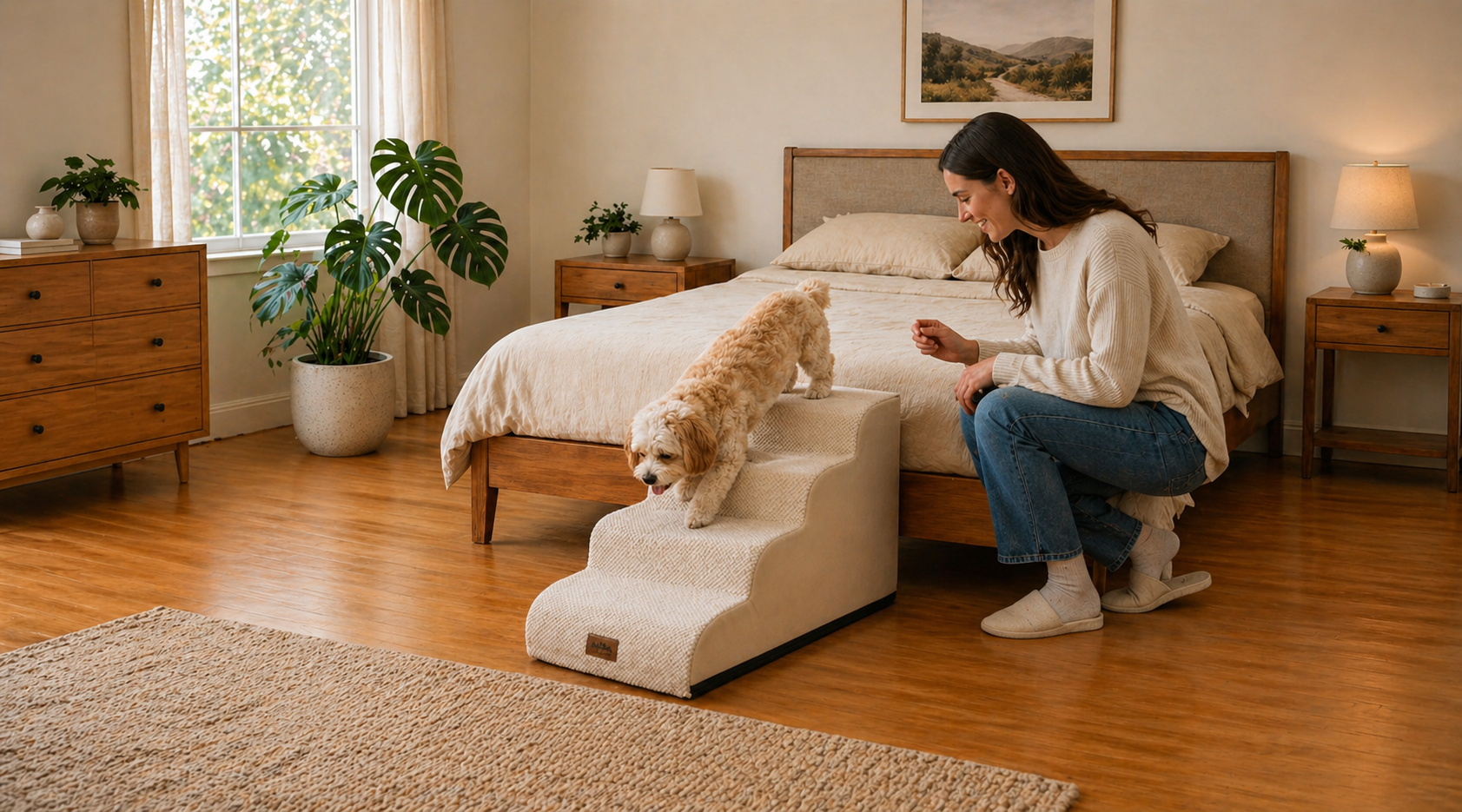
Introducing pet stairs earlier makes the transition much easier. Dogs adapt faster when they are still comfortable and confident, and using stairs becomes a natural part of their routine rather than a forced change.
More importantly, reducing repeated jumping early helps protect joint health over time. In simple terms, it is not just about solving a problem — it is about preventing one.
Foam Dog Stairs Are Designed for Real Home Use
Not all dog stairs are built for how dogs actually move at home. While the idea of stairs may feel natural, the real experience depends on the design details.
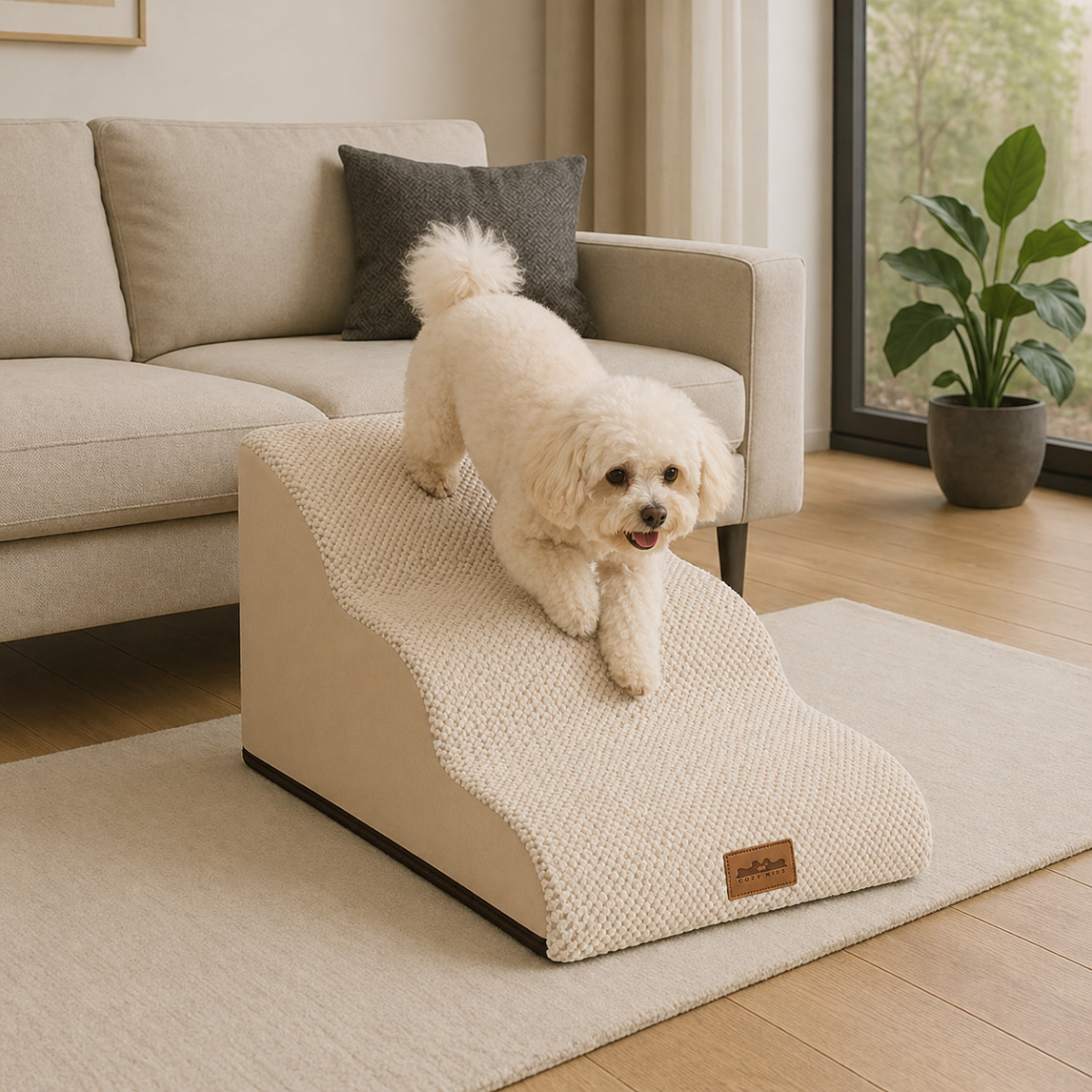
Foam dog stairs are specifically created for indoor use, where stability, comfort, and ease of movement matter most. Instead of focusing only on function, they are designed around how dogs naturally step, pause, and adjust in everyday situations.
What Makes Foam Dog Stairs Different
Unlike traditional wood or plastic steps, foam stairs focus on reducing pressure and increasing confidence with every step.

- Wider steps give dogs more room to place their paws securely
- Lower step height reduces strain on joints and makes climbing easier
- High-density foam provides stable support without feeling hard or slippery
- Non-slip base keeps the stairs firmly in place on different floor types
- Soft fabric surface feels comfortable and safe for daily use
- Lightweight design allows easy movement between rooms
Why Foam Dog Stairs Are Better for Daily Use at Home
These design details are not just about convenience. They directly shape how a dog experiences movement at home.
When stairs feel stable and predictable, dogs move with less hesitation and more control. This is especially important for senior dogs, small breeds, and dogs with joint sensitivity, where confidence plays a big role in whether they choose to use the stairs at all.
Over time, a well-designed set of foam stairs becomes part of a dog’s natural routine — not something they avoid, but something they rely on.
This is why foam dog stairs are often preferred for everyday indoor use, especially in homes where comfort, safety, and convenience matter.
Final Verdict: Dog Stairs vs Foam Dog Stairs
Both stairs and ramps can help reduce jumping, but they serve different purposes.
For everyday indoor use, dog stairs are often the more practical choice. They are easier for most dogs to understand, more comfortable to use, and more likely to become part of a daily routine.
Ramps remain beneficial in specific scenarios, particularly for vehicle access or for dogs with more advanced mobility limitations.
For most homes, however, stairs offer a more natural, comfortable, and reliable solution for most everyday home situations.
FAQ
Are dog stairs better than ramps for small dogs?
For small dogs and short-legged breeds, dog stairs are often easier to use than ramps. The step-by-step structure feels more natural and requires less balance, making it a better fit for everyday indoor use.
Do dogs use ramps easily?
Some dogs adapt to ramps quickly, but many need time and training. Because ramps require continuous movement on an incline, they can feel unfamiliar or unstable—especially for senior or cautious dogs.
What dogs benefit most from pet stairs?
Pet stairs are ideal for senior dogs, small breeds, and dogs with joint issues such as hip dysplasia or IVDD. They are also helpful for any dog that frequently jumps on and off furniture.
When should I start using dog stairs?
The best time to introduce dog stairs is before your dog shows signs of pain. Starting early helps build safe habits and reduces long-term stress on joints.
Are foam dog stairs safe for everyday use?
Yes. High-quality foam dog stairs are designed for stability and comfort, featuring non-slip bases and supportive foam. They are especially suitable for daily indoor use.


Dejar un comentario
Este sitio está protegido por hCaptcha y se aplican la Política de privacidad de hCaptcha y los Términos del servicio.